
Stem cells to cure deafness

Researchers have now taken a major step to cure bad hearing by growing up functioning human auditory cells.
Category: RESEARCH | Back »

Researchers have now taken a major step to cure bad hearing by growing up functioning human auditory cells.

Cardiovascular disease can be deadly for your heart, but did you know it can also be detrimental to your hearing? Studies indicate those with cardiovascular disease are 54 percent more likely to have a hearing impairment.

Photo: Hear-it.org
Scientists from the University of California have found out how “the cocktail party effect” works. The cocktail party effect is the well-known human ability to focus on and pick out the speech of one person in a large crowd where there is a lot of background noise.
Continue reading "The mystery of the "cocktail party" effect solved!" »

Why visualize when it is possible to auralize? Monika Rychtáriková (from Department of Building Structures, STU Bratislava, Slovakia and Acoustics and Thermal Physics, KU Leuven, Belgium) held one of the plenary speeches at Euronoise 2012 in Prague.
Continue reading "Listening Matters in Building and Room Acoustics by Monika Rychtáriková" »
Daniel Västfjäll, Chalmers University in Sweden, is involved in a project where they study the connection between what we hear and what we see - regarding disturbing work related sounds.
Continue reading "What we see affects how we perceive sound at work " »

We are pleased to announce that the final report entitled "Acoustic design of open-plan offices" from the Nordic Innovation Centre about the acoustic conditions in five open-plan offices situated in Sweden, Denmark, Norway and Finland will shortly be published.
This report will soon be available via download at the Nordic Innovation Centre Homepage. We'll keep you posted!
Sometimes the answer is closer than you think...
When asking people what annoys them at the office you often hear the answer: "My co-worker speaks to loud on the phone" or "My colleagues are so noisy when talking and laughing". Therefore, it is perhaps not that surprising that this report states that sound propagation, spatial decay and distance of comfort are important factors to take into account in the acoustic design of open plan offices.
Can the design of a room lead to quicker recovery?
That is what is being investigated in a project at an ICU at Södra Älvsborgs hospital in Borås, Sweden.
The design of the room includes the use of soft colors, the sound environment is being controlled by acoustic ceilings and the light can be adjusted to the hours of the day.
Ecophon arranged the ceilings and WSP, made acoustic measurements (according to Room Acoustic Comfort™). Contact Ecophon for more info on the measurements.
Noise at work significantly 'heightens heart risk' and makes you weigh and smoke more, study finds.

Robert Ljung (Luleå University of Technology in Sweden/University of Gävle) just concluded his doctoral thesis on room acoustics and cognitive load. The basic hypothesis for the whole project was that listening to speech in a bad acoustic environment should increase the cognitive load for the listener, which should impair memory of the text.
Continue reading "New thesis! Room acoustics and cognitive load when listening to speech" »
TOTI is the name of a new project in Finland, coordinated by the Institute of Occupational Health, with the objective to provide holistic guidance in future office design.
This unique project combines environmental psychology, acoustics, ventilation, HVAC design and real estate business.
For more info and for pdf download click here

Sustainability does not only relate to recycling of materials and reduction of emissions, it also includes acoustics! The New Zealand Acoustical Society hosts a satellite conference in connection with the ICA 2010 conference in Sydney.
Continue reading "Sustainability also includes acoustics!" »

U.S. researchers discovered a sound recording from 1860. It is probably the world's oldest audible recording of a human voice. Read more and listen to how it sounds!
Continue reading "Listen to the world's first audio recording!" »

If you want to know more about auditory neuroscience - or simply how is sound processed by our brains, here is a informative website with many good links:
This year will be the start of a doctoral study to be performed at an ICU department at Södra Älvsborgs Sjukhus in Borås, Sweden.
The aim of the project is to study if a holistically designed patient room in a general intensive care unit affects (supports well-being of) the occupants compared to a traditional ICU patient room. The contribution of the sound envrionment will be among the key factors to be studied.
The project is funded by Sahlgrenska Academy, at Gothenburg University and collaborates with the Institute of Architecture at Chalmers University.
Continue reading "The ICU patient room - a healing environment (new study)" »

Last year CIOP (Central Institute for Labour Protection - National Research Institute) investigated noise problem in public primary schools in Warsaw.
The main focus of this survey, initiated by Ministry of National Education, was the noise impact on school staff’s health and well-being. Important part of this research was a survey among teachers checking their awareness of noise threat. Close to 200 teachers returned filled questionnaires. Have a look at interesting results:
Do you experience discomfort during work caused by …… . (% of answers “yes”):
- noise 88,2%
- lack of space 32,1%
- bad ventilation 27,3%
- bad lighting 13,9%
- dustiness 3,2%

Musicians, trained to hear sounds embedded in a rich network of melodies and harmonies, are primed to understand speech in a noisy background.
![]()
Photograph: hear it.org - nursery teachers wearing hearing protection
Daily exposure to excessive noise in the workplace is the primary factor in many cases of hearing loss in the working population.
For more information read more about this and a series of articles published by hear it.org regarding excessive noise for office workers, teachers, nursery teachers, dentists, classical musicians and industrial workers
Continue reading "Work noise increases risk of hearing loss" »
Children spend at least 45% of the school day in schools listening! The average hearing loss with middle ear infection is 30 dB. 90% of very young children´s knowledge is connected to hearing conversations around them! These are some relevant facts, but also advice, which you can find at the website of Illinois State University if you go straight to this pdf!

A symposium on speech comfort, acoustics and learning was organised by Ljudmiljöcentrum (Listening Lund – The Sound Environment Centre at Lund University, Sweden) in cooperation with Saint-Gobain Ecophon and the Swedish Acoustical Society.
This was a very fruitful occasion, for people with various backgrounds and a keen interest in sound and acoustics, to exchange knowledge and experience.
Continue reading "JOINTLY ORGANISED SYMPOSIUM: SPEECH COMFORT, ACOUSTICS AND LEARNING" »
The most common cause of hearing loss is damage to the hair cells in the inner ear. Once hair cells die, humans (like other mammals) aren’t able to grow new ones. Zebrafish, unlike humans, are able to regenerate their damaged hair cells. US researchers hope knowledge about this can help humans in the future.
Coming up soon in New Zeeland is a symposium on tinnitus. This meeting will be a great opportunity for tinnitus clinicians and researchers to join forces and updated their knowledge on this subject.
Reported in Ecophon Acoustic Bulletin (November 3, 2008) screening of primary school pupils’ hearing wasn’t a research program only. One of the main tasks was to build awareness toward hearing protection and noise control. A short guide for children, parents and teachers has been prepared, with advises how to protect hearing and how to find first signs of problems. Polish readers can have a look at original text here. Less fluent in Polish can click link below for English translation.
Continue reading "11 COMMANDMENTS TO PROTECT YOUR HEARING" »

Each of us exposed to noise of certain level will suffer so called Temporary Threshold Shift (TTS) – that is in fact temporary partial hearing loss. The TTS level and its duration depends on level of the noise, time of exposure and noise frequency band. There is no need to visit military firing ground to experience it – just go to the primary school in your neighborhood! Noise levels (Leq) measured in primary schools corridors very often varies between 80 and 90 dBA. Recently prepared simulation program shows that 20 min exposition for noise of Leq=88 dBA cause TTS of 20-24 dBA and hearing needs 165 min of rest for full recovery.

The increased number of people working in open-plan offices has revealed the lack of knowledge regarding how to design an acoustical environment that’s supporting the activities going on there. Challenges in open-plan office design are to create an environment both for concentration and communication without disturbances between different working groups. In a Nordic Innovation Centre project the acoustic conditions in five open-plan offices have been investigated. The offices were situated in Sweden, Denmark, Norway and Finland.
Continue reading "Open-plan offices - An intervention study" »
When looking for a thorough overview of the research on how noise affects people I always still refer to the document “Community Noise” prepared for the World health Organisation (WHO). It used to be a book, but has for many years existed on the web as well. Here you can find the documentation edited by Birgitta Berglund , Thomas Lindvall and Dietrich H Schwela.

A fierce debate occurred recently, mainly regarding the negative effects of open-plan offices. Open-plan offices make people ill – we could read in media! Stress, colds and decreased productivity are the backsides, Australian researchers say. In 90 percent of the research, the outcome of working in an open-plan office was seen as negative! Can it really be so bad?
Continue reading "Can open-plan offices really be that bad?" »
Costas Karageorghis is a jazz musician, a former athlete and researcher. He has been involved in music and sports since some 20 years. Costas performed several studies revealing that music can enhance your performance when training. What matters is the beat of the song! The relationship between heart rate and music preference is key to maximising the psychological benefits of music.
Continue reading "Let the beat of the music maximise your training" »
This investigation show an increased occurrence of hearing impairment among school and preschool (kindergarten) staff. Since the noise exposure in schools is indeed high, it seems important to decease sound levels in Swedish schools.
(Summary in Swedish)
(another summary in Swedish)
Continue reading "Swedish study on hearing impairment and tinnitus among school staff" »
Nurse researchers have provided evidence that hospital critical care unit (CCU) noise may put patients at risk of sleep problems. The study, by M Topf and M Bookman at University of Colorado Health Sciences Center, goes on to say that technological advances in CCU's are contributing to this problem and that the results provide support for the hypothesis that CCU sound levels impact negatively on subjective sleep.
Continue reading "PATIENTS RISK SLEEP PROBLEMS FROM NOISE IN HOSPITAL CRITICAL CARE UNITS" »
ANSWER: At least, adding absorption to a room will help to prevent tinnitus.
Scientists from the California Ear Institute in San Ramon, California have discovered a potential cure for some instances of tinnitus in the nerve agent Botox. One in four tinnitus patients in a study experienced improvement in their symptoms following treatment with Botox, 16 reported no change and three said their tinnitus had become worse.
Of course preventing Tinnitus should be priority number one. Applying stricter acoustic demands will benefit the ones suffering from Tinnitus and will support to prevent tinnitus. Effiicient absorbing ceiling panels and wall panels will support the decrease of sound pressure levels.

From March to June this year, huge screening on 7-years old children’s hearing was done in 7 eastern provinces of Poland (with 42,3 % of total country population). During 4 months, 85% of seven years old children on this territory were examined. The results point out that 20% of them have different forms of permanent or temporary hearing impairment. Big scale of this problem indicate that more strict classroom acoustic demands, used to determine environment for hearing impaired persons, should be applied commonly to all types of schools.

The Essex study ran for 5 months during the academic year 2007/8 during which period classrooms were repeatedly modified acoustically. Many objective and subjective measures were obtained and initial findings have been described as ‘very powerful’!
Continue reading "The Essex School Study - optimum classroom acoustics" »
Noise levels in hospitals are typically more than 15 dB(A) higher than target values given in guidelines (for example target values from WHO and the US Environmental Protection Agency). Furthermore, noise is often one of the top complaints from staff and patients. This is concluded in a review made by Hui Xie and Jian Kang at the University of Sheffield.
Mr Fausto E. Rodriguez Manzo presented a paper about "sonic" character of architecture.
The author stated, that hearing should be understood almost equally to sight, as a sense used to perceive architecture.
Mr.Fausto E. Rodriguez Manzo
Metropolitan University in Mexico City.
E-mail:rfme@correo.azc.uam.mx
By Mikołaj Jarosz, Concept Developer - Education, Ecophon Poland.
E-mail:mikolaj.jarosz@saint-gobain.com
Directly after the session on healthcare and acoustics this afternoon we had a little talk with Dr Michael Phiri, one of the presenters.
Dr.Michael Phiri is Senior Research Fellow in the School of Architecture at the University of Sheffield.
By Marc Janssen, Concept Developer - Healthcare, Ecophon.
On Tuesday Adrian Popplewell of Arup Acoustics presented a paper entitled "The Future of UK Hospital Design", and here he summarises for Acoustic Bulletin his involvement in the early drafting of HTM 08.01, the new Acoustic Guidance document for Healthcare. He also talks about the Drivers for Change in Healthcare over the coming years.
By Anthony Thomas, Concept Developer - Healthcare, Ecophon UK and Ireland.
Listen to the interview (2,27 minutes).
If you have questions or comments, please contact Anthony Thomas.
E-mail:anthony.thomas@ecophon.co.uk
Dr.Michael Phiri is Senior Research Fellow in the School of Architecture at the University of Sheffield.
He talks to Acoustic Bulletin about his presentation this afternoon entitled "Eliminating Environmental Stressors: managing hospital noise by design".
He is an advocate of the use of Evidence-Based Design to improve patient outcomes and reduce hospital operating costs.
For info, email:m.phiri@sheffield.ac.uk
By Anthony Thomas, Concept Developer - Healthcare, Ecophon UK and Ireland.

I am Tobias Angelbeck, Concept Developer for Acoustics in Health Care Premises, Ecophon Germany. I talked to Dr. Jo Solet – the clinical Instructor at the Harvard Medical School, Department of Psychiatry, Cambridge, MA (USA).
Right now she and her department are doing two researches.
One is a behavioural research project related to patients exposure to noise, with an outcome on measure of medical views.
The other is a virtual hospital in a neuroscience lab, studying how patients respond to specific real stimuli in a hospital environment.
Tor Halmrast
Mr Tor Halmrast from Norway had a very interesting lecture about how to measure reverberation time, and how important it is to be a good “cougher”.
Tor works with music and acoustics. When he is on holiday, he often finds interesting rooms what he wants to measure. To measure room acoustic parameters today requires a lot of equipment that you seldom bring with you. That is why Mr Halmrast bought a small Wav-recorder and some balloons.

An interview (2,44 minutes) with C.J Ostendorf (Senior Projectleader) from Cauberg-Huygen Raadgevende Ingenieurs BV in Maastricht and Jack B. Evans (President) JEA Acoustics in Austin Texas.
By Marc Janssen, Concept Developer - Health Care, Ecophon.

Professor Kang has been involved in many acoustic research projects with the University of Sheffield, and speaks to Acoustic Bulletin on his recent and current research in Healthcare environments and summarises his presentation entitled "A Systematic Review of the Influence of Noise on Patients Sleep in Intensive Care Units".
By Anthony Thomas, Concept Developer - Healthcare, Ecophon UK and Ireland.
Listen to the interview (3,04 minutes).
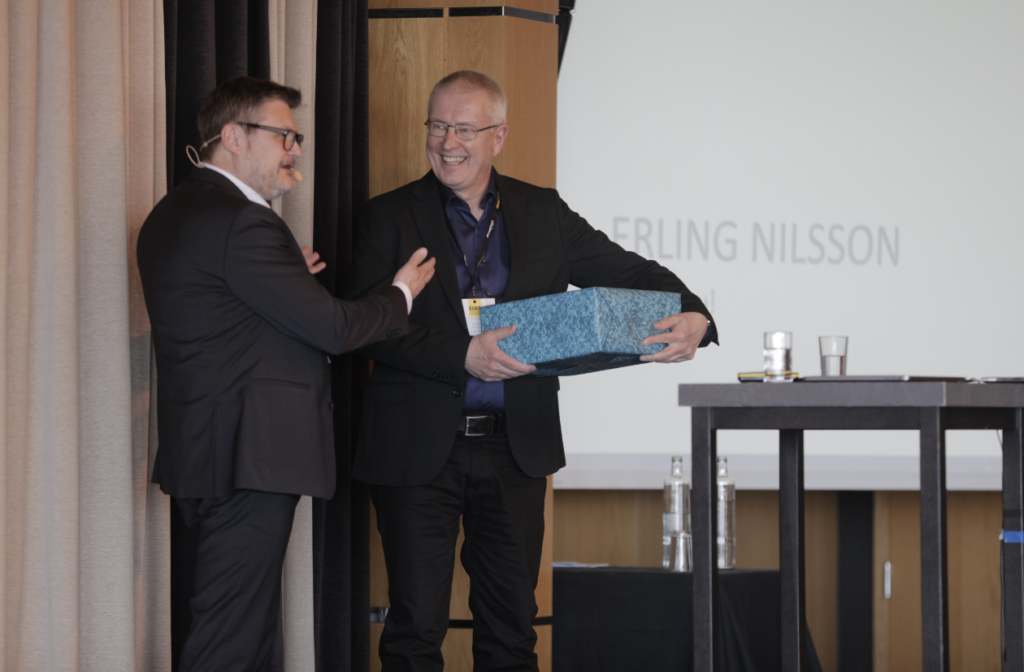
Erling Nilsson, Acoustic Specialist, Ecophon.
Some reflections on the afternoon's session about acoustic for open-plan spaces. It was interesting to note that there exists some consencus concerning evaluation of the acoustical conditions in open-plan spaces. Measures like DL2 and DLf were frequently used in the presentations as well as methods for transforming these values into user friendly descriptors like e.g. radius of comfort. A good start of the conference and it will be really interesting to take part of coming events at one of the largest conferences ever.
In order to reduce work related injuries and long-term illness caused by noise, about SEK30 million over three years will be allocated to conduct research into noise in the workplace in Sweden. The funding will be provided by the Swedish AFA Försäkring insurance company. Read more here.
Noise levels at schools are too high. The children become tired, unfocused and stressed and don't hear well. The behaviour of the children also affects noise levels with their voices being raised to be heard over the others. Read more here about this study in Uppsala in Sweden.
Mike Barron from the University of Bath, UK, asks himself “when is a concert hall too quiet”? Sound levels in concert halls decrease with distance, but assessment of subjective loudness indicates that loudness judgement is more or less independent of distance from the stage. This leads to the conclusion that listeners compensate their judgement of loudness on the basis of what they see. So people at the back of the hall may compensate for the distance from the source!

Markus Oberdörster and Gerhart Tiesler
The acoustic environment of classrooms has a significant impact on new modern teaching scenarios. Today, in many countries, education and teaching is becoming more student centred and differentiated. Classrooms that might have worked well for decades might have to be acoustically “updated”. Markus Oberdörster from Ecophon Germany, together with Gerhart Tiesler from ISF University of Bremen in Germany, spent years investigating the room acoustic conditions of a large amount of German classrooms. Markus talked about acoustics and teaching styles, but also questioned the relevance of Sabine’s formula in non-diffuse conditions and reverberation time as the only acoustic descriptor to use. Gerhart took this further by revealing data on how poor room acoustics has an impact on teacher’s workload, i.e. heart rate as stress indicator. The consequence of acoustically good classrooms is reducing the stressor “noise”, giving higher activation, reducing fatigue and potentially better learning results by the students.
How noisy is your surrounding environment and how sensitive are you to noise? Researchers at the Institute for Occupational Physiology / The Leibniz Research Centre for Working Environment and Human Factors at the University of Dortmund (IfADo) in Germany are looking at these individual differences within the framework of a European research network called "SILENCE". By using an internet questionnaire they hope to learn more about how sensitive people are to noise. If you want to know more about this project, read this. Test your noise sensitivity here! You have several language options and you will receive feedback.
"Sound design of open plan offices” is a Nordic research project that started 2006 and will be finished 2008. The project is partly financed by the Nordic Innovation Centre and has delegates from Denmark, Finland, Norway and Sweden. The aim of the project is to identify acoustical parameters with relevance for the acoustical conditions in open-plan offices. So far, measurements has been carried out in five offices, two in Sweden and one each in Denmark, Finland and Norway. The staff in these offices has also respond to a questionnaire that reflects the present acoustical environment. Next step will be acoustical improvement of some of the offices followed up by measurements and a new round with the questionnaires.
In an ongoing project partly financed by Nordic Innovation Centre and Saint-Gobain Ecophon AB the acoustical conditions in open-plan offices (OPO) is investigated. The aim of the project is to define acoustical parameters with relevance for the subjective impression of the acoustical environment in these premises. It is also the intention that these parameters will be useful in the acoustical design process. Measurements are carried out in real-life conditions and followed up by questionnaires among the personal.
Continue reading "Sound in Open-Plan Offices - a Nordic Project" »
Over a million votes were cast worldwide in an online science experiment. University of Salford in UK and Professor Trevor Cox analysed the results of public perceptions of unpleasant sounds.
In December 2006 the Danish National Institute for Occupational Health published the result of a large study of the working environment in Danish workplaces. More than 9.000 people participated in the research (NAK) and it was discovered that noise and poor acoustics is perceived as a serious problem. This is one of the reasons why the Danish government has just chosen “Noise from human activities” as a focus area for upcoming research.
This action also supports the increasing awareness of noise problems in Danish workplaces during the last 5 years – both from the media and in different research projects. One of the interesting research projects comes from Thomas Witterseh, Danish Institute of Technology”. His ph.d. report “The effects of moderate heat stress and open-plan office noise distraction on SBS symptom intensity and the performance of office work", examines amongst other issues the relationship between noise distraction and performance in open plan offices. Learn more from this report
A study on acoustic ergonomics of schools was recently published by the Federal Institute for Occupational Safety and Health (Dortmund/Berlin/Dresden) in Germany. It covers room acoustics of schools, teaching styles, teachers’ health and pupil behaviour. Results show that room acoustic improvements leads to better working conditions, sound pressure levels decreases, pupils’ social behaviour becomes calmer, teachers experience a lower load and noise/sound level sensitivity.
The study was conducted by Dr. Markus Oberdörster and Dr. Gerhart Tiesler, under the umbrella of the Institute for interdisciplinary school research of the University of Bremen. Its original name is “Akustische Ergonomie der Schule” and an English translation (2006) is now available.
This study can be purchased at (www.baua.de) (direct link: http://www.baua.de/nn_8514/de/Publikationen/Forschungsberichte/2006/Fb1071e.html__nnn=true) or a condensed version can be downloaded as a pdf here (Download file">Modern School Acoustics - English)
For information contact: carsten.svensson@ecophon.se
Anders Kjellberg, Professor, University of Gävle, has been granted € 215 000 for a research project on room acoustics, cognitive load and learning in speech communication.
Besides Ecophon, the project involves several Swedish research institutions in environmental psychology, learning and room acoustics.
The main focus of the project is to see how and why long reverberation makes learning more difficult. The project will run 2006-2010.
Continue reading "Acoustics, cognitive load and learning in speech communication" »
"Sound design of open plan offices" is a Nordic research initiative, partly financed by the Nordic Innovation Center to identify room acoustic parameters and measurement methodology for open-plan offices. The objective is to guarantee an appropriate sound environment for open plan office workers. This includes extensive case studies of typical open plan offices in Denmark, Finland, Norway and Sweden.
Under the coming two years, the project will involve open plan and room acoustics specialists from five Nordic acoustic consultancy firms Helimäki Ltd, Delta Acoustics, Brekke & Strand, Erling Nilsson Akustik and Ingemansson Technology
Ecophon is initiative taker and owner of the project, to be ended 2008.
Project Manager is Anna Berglöw, Ingemansson Technology.
Communication of the findings to the architect profession as well as open office end-user organisations are important aspects of the project.
Continue reading "Nordic acoustic consultancy firms investigate open plan acoustics" »
The Euronoise room acoustics session included 7 lectures last wek in Tampere (Finland). Important developments are taking place in that field. Promising!
Continue reading "Room acoustics developments pointed out at Euronoise last week" »
Man and Noise network had its first meeting in Stockholm end of November 2005.
The network gathers Swedish research institutes conducting research on sound mostly from an occupational perspective. It aims at facilitating cross-diciplinary research, increase quality of research projects and help to rationalise research efforts within the field noise and man.
Highlights from the ca 15 lectures made:
Continue reading "Man and noise network - firsts meeting in Stockholm" »
Researchers at the Johns Hopkins University in Baltimore, USA have studied how typical noise levels have developed in hospital environments.
John Culling, Researcher at Cardiff University, School of Psychology has been granted with € 511 000 for a three-year research project on "Effects of reverberation on conversation in rooms".
Continue reading "Effects of reverberation on conversation in rooms" »
Good room acoustics facilitates speech communication. A newly published review on the effect of reverberation time by Anders Kjellberg, Professor at the University of Gavle in Sweden, emphasises the long term effects of poor room acoustics.
Continue reading "Review on the effect of reverberation time" »
The relation between reverberation time and the physical properties of the enclosure boundaries has involved many acousticians over the years and this paper by Jie Pan from the University of Western Australia takes a close look at this.
Read abstract and/or purchase the paper at: IngentaConnect >>
Ecophon is supporting a research study conducted at Cardiff University, School of Psychology by Professor Dylan Jones and Dr Simon Banbury. The aim is to look at the effects of stress and anxiety on the disruption of tasks by office noise.