Noise in hospitals is not new.
In 2005, Ilene Busch-Vishniac and colleagues published Noise levels in Johns Hopkins Hospital *, combining measurements from Johns Hopkins Hospital with historical data from hospitals around the world. Looking back approximately 45 years, the researchers identified a striking trend: hospital sound levels had been increasing during both daytime and nighttime hours. At Johns Hopkins itself, average equivalent sound levels were typically 50–60 dB(A), and none of the locations investigated complied with the World Health Organization recommendations.
The historical analysis indicated that, from the 1960s to the beginning of the twenty-first century, average hospital noise had risen substantially, with an increase of roughly 15 dB during the day and 18 dB at night.
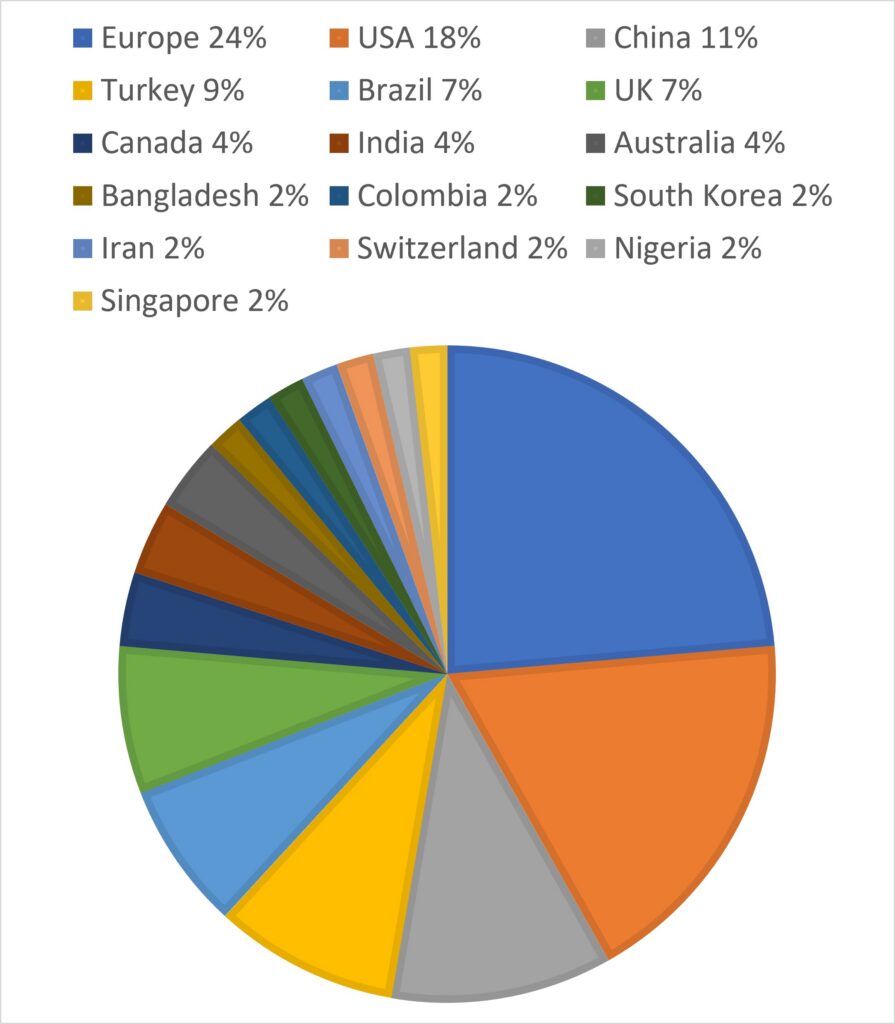
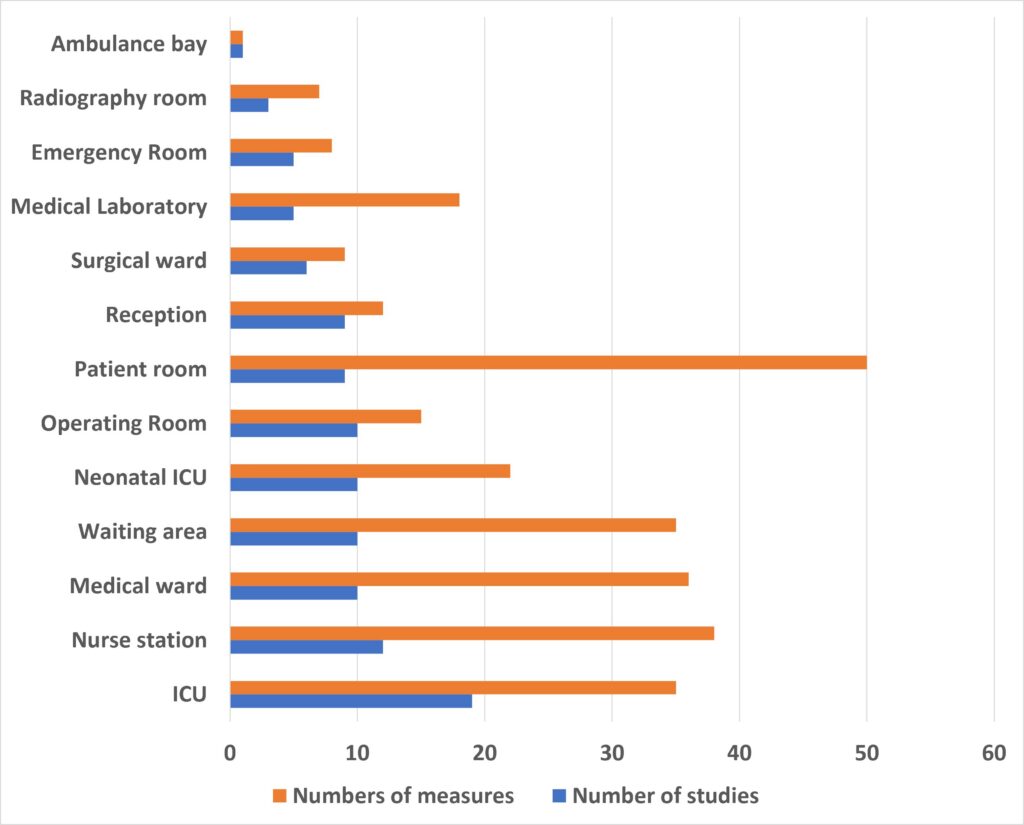
Twenty years later, new research presented by Elisa Nannipieri and colleagues at Forum Acusticum 2026, Temporal Trends in Acoustic Climate in Hospital Wards **, revisits the question from a much larger contemporary evidence base. Their systematic review examined more than 55 scientific articles and measurements from 305 hospital wards, covering research from approximately 2000 to 2025. The studies came from many parts of the world and included intensive care units, surgical wards, nurses’ stations, patient rooms, laboratories, emergency departments and other healthcare environments. The conclusion is uncomfortable: the upward trend appears to have continued.
Twenty more years, and noise is still rising
When Nannipieri and colleagues reported A-weighted equivalent sound levels by measurement year, they found an average increase of approximately 0.28 dB per year over the past 25 years. The overall figures therefore support the fundamental observation made by Busch-Vishniac in 2005. Hospital noise did not peak around the turn of the century and then decline. Across the body of published measurements reviewed by Nannipieri, the fitted trend continues upwards into the 2020s.
Importantly, the development is not uniform across the hospital. Nannipieri reports particularly clear increases in environments with substantial medical and electro-medical equipment. Surgical wards and intensive care units increased by approximately 0.31 dB per year, while nurses’ stations and analysis laboratories showed increases of around 0.2 dB per year. Neonatal intensive care units, by contrast, showed no significant change over the last 20 years, with most of the 21 cases between 56 and 61 dB. Waiting rooms and transit areas also showed no increase over time in the review.
This distinction matters. Rather than hospitals simply becoming uniformly louder, it suggests that the progression may be concentrated in particular clinical environments. Nannipieri and colleagues associate the increases in surgical and intensive care environments with the growing number of medical and electro-medical alarm devices.
When normal conversation competes with the hospital itself
Already in 2005, the consequences of these sound levels were evident. Busch-Vishniac found that the measured average sound levels at Johns Hopkins exceeded the 45–50 dB(A) typical speech level for communication between two people. The authors therefore concluded that staff routinely need to raise their voices to communicate above the background noise.
That observation remains especially relevant when considered alongside recent findings. Nannipieri’s review found equivalent hospital sound levels ranging from 41.0 to 96.3 dB(A) across the environments included, with the highest reported value measured in an operating room. The review also identifies talking, movement and monitor alarms among sources exceeding 70 dB(A), while some equipment-related sources exceeded 88 or even 90 dB(A).
This creates an important acoustic interaction. People do not communicate in isolation. As background sound increases, voices have to compete with it. A noisy hospital can therefore create conditions in which communication itself contributes further sound to an already noisy environment. Busch-Vishniac’s conclusion remains strikingly relevant: the sound pressure levels observed were sufficiently high to interfere with sleep, potentially affect speech intelligibility unless voices are raised, and create a general background din that many people find annoying.
WHO recommendations remain far from everyday hospital reality
One finding of the 2005 study was that none of the locations studied at Johns Hopkins complied with WHO guidance, and the authors’ review of published measurements suggested the problem extended to hospitals internationally. At Johns Hopkins, average levels exceeded the WHO guidance substantially, by at least 20 dB(A) for average levels according to their comparison.
The newer research paints a remarkably similar picture. Nannipieri reports WHO reference values of 35 dB(A) Leq during the day and 30 dB(A) Leq at night, and concludes that most of the reviewed studies reported levels exceeding WHO limits.
Take home message
In other words, despite two decades of increasing awareness of the hospital sound environment, the fundamental gap between recommended and measured conditions remains. The message from more than six decades of research is therefore not merely that hospitals are noisy. It is that the problem identified decades ago has not disappeared. The long historical rise observed by Busch-Vishniac is followed by another upward trend in the contemporary literature.
Different methodologies prevent us from treating those findings as one seamless dataset. Taken together, they provide a compelling warning: despite growing knowledge of the importance of the healing environment, hospital sound levels remain well above recommended levels and, in several critical clinical environments, evidence indicates they continue to rise.
That deserves attention not simply as a question of acoustic comfort, but as part of creating healthcare environments where patients can rest and recover and staff can communicate effectively while carrying out complex work.
………………………………………………………………………………………………………………………………………………………………………………………………………………………………………………………………………………
Sources:
* Busch-Vishniac IJ, West JE, Barnhill C, et al. Noise levels in Johns Hopkins Hospital. Journal of the Acoustical Society of America, 2005;118(6):3629–3645.
** Nannipieri E, Amodeo V, Astolfi A, et al. Temporal Trends in Acoustic Climate in Hospital Wards. 12th Convention of the European Acoustics Association, Forum Acusticum, Graz, 2026.