

Call for Papers… Growing evidence of the need to address the diverse needs and preferences of occupants The acoustics of the built environment strongly influence occupants’ health, well-being, comfort and performance. Growing evidence highlights the need for acoustic design approaches that explicitly address the diverse needs and preferences of occupants, to ensure accessibility regardless of […]
Education
What does a good classroom sound like to a child? – The SOUNDkids project
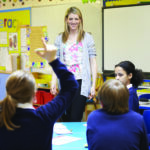
A guest post by Chiara Visentin, a researcher at the University of Ferrara, Italy Moving beyond noise control towards a child-centred approach to classroom soundscapes When we think about good classroom acoustics, we often think about reducing noise, controlling reverberation and making the teacher’s voice easier to understand. All these aspects are essential. But are they […]
Education session overview Forum Acusticum 2026 Part 2

“Acoustics for learning environments across physical and virtual realities” Chaired by Jenina Fels & Arianna Astolfi After the opportunity to view the interesting poster session in Gratz the learning environments session continued… Arianna Astolfi – Reality versus Virtual Speech Intelligibility in a lecture room When field assessments are not feasible, virtual reality (VR) provides a […]
Education session overview Forum Acusticum 2026 Part 1
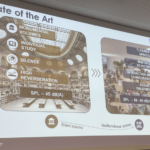
“Acoustics for learning environments across physical and virtual realities” Chaired by Jenina Fels & Arianna Astolfi Forum Acousticum 2026 held in Gratz, Austria, this September was a certified “Green Meeting” Session overview part 1 A great mix of topics from acoustic modelling, predicting how learning spaces might sound and be perceived, listening effort and comfort, […]
Acoustical Capacity for Group Work in University Classrooms
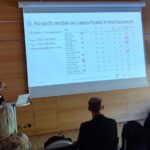
At BNAM 2026 – “Room Acoustics – Offices, Hospitals, Schools, Restaurants” Oliver Bonde’s presentation “Acoustical Capacity for Group Work in University Classrooms” was first up in the session named “Room Acoustics – Offices, Hospitals, School, Restaurants”, chaired by Peter Svensson and Ayca Sentop Dumen. Background and based on Rindel’s eating establishments As Oliver explained, the […]
New research study to investigate noise exposure and stress in Finnish sports halls
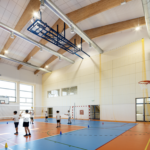
The Liikkamelu project, begins now in spring 2026 and will produce for the first time research-based data on the noise exposure and stress of those working in sports halls. Study Aims This project will examine the noise exposure, stress and well-being of those working in sports halls, as well as the room acoustics of the […]
Quiet Enough to Think, Open Enough to Thrive
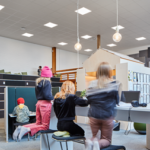
A qualitative study of sound environments in traditional and open classroom settings This Swedish qualitative study explores how students, teachers, and school staff at Gantofta School experience the sound environment in two contrasting learning settings: a traditional classroom (Learning space typology – Type A/B, Fig.1) and an open, flexible learning environment known as Amfi (Lst […]
Acoustical Consultant
Photo by Ela Fasllija
The many impacts of inadequate acoustic environments on neurodivergent and noise sensitive people.
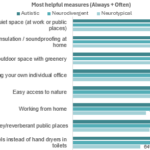
Guest post by Carmen Rosas-Pérez (a PhD student at Heriot-Watt University, Edinburgh (UK)). Overview This post summarises the research done for my PhD Thesis ‘Disabling Acoustics: Impact of daily-life acoustic environments on neurodivergent, auraldivergent and noise sensitive people’ carried at Heriot-Watt University (UK) and funded by a James Watt scholarship. As a neurodivergent acoustic engineer […]
The importance of C50 for speech communication and classroom group activities
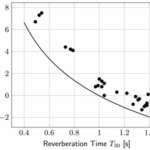
This study investigates the acoustic conditions of 26 primary school classrooms during lessons. There was a specific focus on how classroom activity type, student age, and room acoustics shape both speech levels and activity noise. Using Gaussian Mixture Models, the researchers separated teacher and student speech from non-speech activity noise across 93 homogeneous activity periods. […]