A qualitative study of sound environments in traditional and open classroom settings
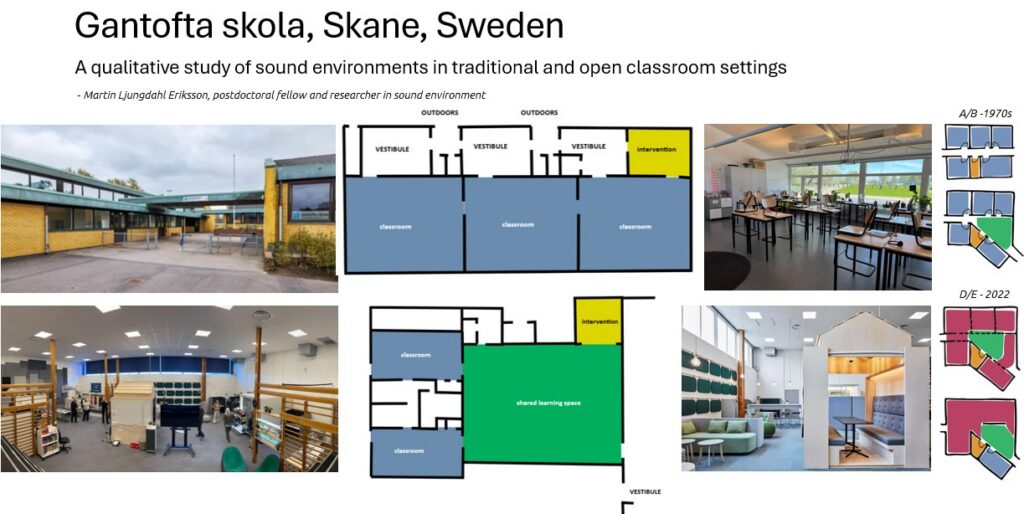
This Swedish qualitative study explores how students, teachers, and school staff at Gantofta School experience the sound environment in two contrasting learning settings: a traditional classroom (Learning space typology – Type A/B, Fig.1) and an open, flexible learning environment known as Amfi (Lst type D/E, Fig 1). Through interviews and acoustic measurements, the study examines how sound shapes concentration, well‑being, safety, and teaching practices. The results provide nuanced insights into how physical environments and social behaviours interact to support—or hinder—learning.
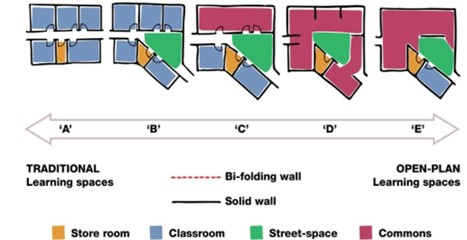
Figure 1. Dovey and Fisher’s Learning space typologies (2014), adapted by Soccio & Cleveland, 2015.
How Students Are Affected
Distractions and Concentration
Students consistently identified other students as the main source of distraction. Noise such as whispering, chair scraping, tapping, or playful sounds made it difficult to maintain focus. Corridor noise—especially during indoor breaks—was also a major disturbance. Even everyday sounds (clock ticking, footsteps) could interrupt concentration in smaller rooms.
To cope, many students used headphones and music, while others preferred a light background murmur to mask more irritating noises.
Learning Environment Preferences
Students valued a quiet, predictable, and structured environment. They emphasised:
- calm surroundings
- clear rules
- comfortable seating
- the ability to choose a quiet corner
- access to small adjacent rooms
- routines for when to talk or move
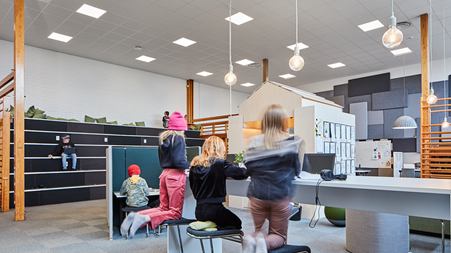
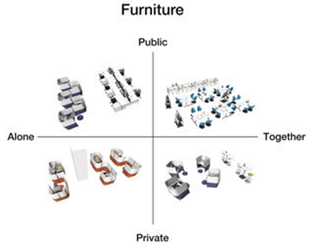
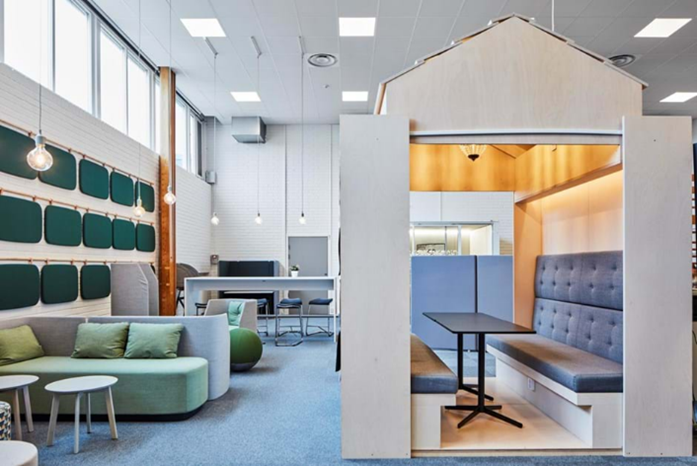
In this regard, Amfi’s spacious layout allowed them a variety of furniture layouts to find quieter spots more easily, and sound dissipated more across the larger area. Many reported getting more work done in Amfi due to fewer noticeable disruptions. See Fig 2, learning activities need to fit the furniture, and zoning to support collaborative or solitary activities.
Figure 2, above, ILETC typologies of furniture 2019
Comfort and Practical Issues
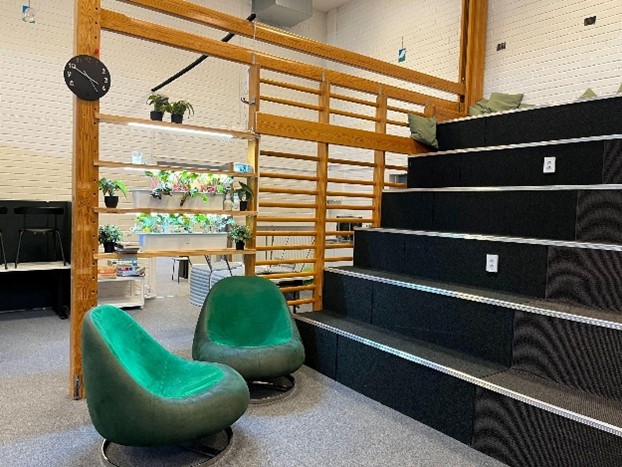
A drawback of Amfi was the furniture—students often sat on stairs or less ergonomic chairs. For longer tasks, traditional desks and chairs were preferred.
Students also noted that in Amfi it was sometimes harder to get a teacher’s attention quickly, simply because of the scale of the room.
Safety and Well-being
Students generally felt safe throughout the school but identified corridors as chaotic, noisy and cramped, particularly on rainy days. Amfi reduced their exposure to these areas, which some students viewed as a safety benefit.
Noise-related fatigue surfaced as a concern: some students felt exhausted after constant auditory distractions and described headaches or irritability when overwhelmed. A calmer soundscape contributed to stronger well-being and a sense of control.
.
How Teachers Are Affected
Classroom Management and Sound
Teachers confirmed students’ reports: social noise, not acoustics per se, is the biggest challenge. Soft chatter, giggling, and playful interactions in tight spaces undermine concentration and require intervention.
Teachers appreciated that Amfi’s acoustics allowed them to speak normally to large groups without raising their voice, reducing vocal strain and stress.
Pedagogy and Oversight
Amfi required adjustments:
- more walking to supervise students
- clearer start-of-lesson instructions
- more structured group work
- ideally longer lesson blocks
Traditional classrooms offered better visibility, quicker recognition of student needs, and more straightforward oversight—advantages for maintaining discipline and providing rapid help.
However, teachers noted more conflicts in traditional spaces: because disturbances affect the whole group, disruptive students are more likely to be reprimanded or sent out, which can escalate tensions.
Student Behaviour and Equity
Teachers observed an interesting pattern:
- In traditional classrooms, one disruptive student can derail everyone
- In Amfi, disruptive behaviour “disappears” into the larger space and is less contagious
This led to fewer exclusions, fewer emotional confrontations, and a generally calmer teaching climate. Teachers valued that students were less likely to be singled out, supporting better relationships and classroom equity.
Capacity and the Impact of Group Size
Teachers agreed Amfi works best with 30–35 students rather than 40–45. With too many, support becomes harder to distribute and transitions take longer.
Key Findings
Sound Environment
- Amfi is acoustically superior: sound-absorbing materials and spaciousness keep noise levels surprisingly low.
- Traditional classrooms are more sensitive to every sound, amplifying disruptions.
Concentration and Learning
- Students generally concentrate better in Amfi, as sound dissipates and distractions spread out.
- Traditional classrooms are better for quick help from teachers and familiar routines.
Safety and Well-being
- Amfi reduces time spent in noisy, cramped corridors, which students identify as the least safe area.
- A calmer sound environment directly improves students’ energy, mood, and sense of security.
Social Climate
- Amfi lowers the chance of students being separated from the group for misbehaviour.
- Traditional rooms make disruptive students more visible, sometimes heightening conflict.
Comfort
- Students prefer traditional classroom furniture for long tasks.
- Amfi furniture needs improvement to match ergonomic needs.
Study carried out by Martin Ljungdahl, postdoctoral researcher and researcher in sound environment design at KTH, Institute of Technology in Stockholm, funded by Saint-Gobain Ecophon AB. We hope this study can help inform future school design of the importance of listening to the occupants views, both teachers and students, taking cognisance of their needs.
Gantofta school has also been observed as a pilot school as part of a ongoing Nordic LED study –
For more info about the Gantofta teacher and student survey contact Ida here