
As a veteran acoustician and the principal author of the UK acoustic standard for schools BB93, Adrian James has spent nearly three decades considering and influencing the role sound plays in classrooms. He notes that the Department for Education’s Advice on Standards for School Premises, 2015, for children with special listening needs (accessible here) is […]
Education
Lily Wang and Maslow’s hierarchy of needs: Wonderful key-note at Internoise in Glasgow.
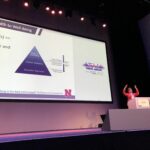
If Michael Jackson was King of Pop – Lily Wang is Queen of acoustics! We feel so lucky to have been part of a legendary keynote presentation that made us laugh, wonder, reflect, and a bit star-struck! Lily has skills that go beyond her impressive professional merits: This lady excels on stage! Add to that […]
Diffuse ceiling ventilation contributes to quieter classrooms at a school in Eslöv, Sweden
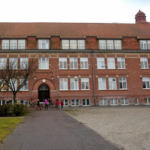
At Ekenäs School in Eslöv, Sweden, we compared four classrooms with almost identical acoustic treatments but differing in the type of ventilation system used. We wanted to know if diffuse ceiling ventilation can offer a quieter as well as more comfortable, sustainable and cheaper solution. Background: diffuse ceiling ventilation Diffuse ceiling ventilation allows air […]
Diffuse ventilation: a quieter, more sustainable alternative for the post-pandemic classroom

Schools globally take on a daily responsibility: to provide the very best environment in which students can grow and thrive. And they need to do it equitably; true inclusivity means that no child gets left behind regardless of background or level of ability. But schools also need to think about the greater context. By raising […]
New Ph.D: Acoustic Design with Regard to Human Perception
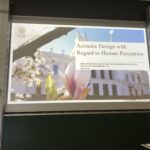
Friday the 13th of May Emma Arvidsson (EA) did her Ph.D. dissertation at Lund’s University (Sweden) under the title ‘Acoustic Design with Regard to Human Perception’. Acoustic design of Ordinary Public Rooms From many years of research, we know that ordinary public rooms (classrooms and offices) where complex tasks such as learning or following long […]
New report shows that European schools neglect their sound environment
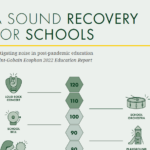
A new report finds that far too many European schools neglect their sound environment. Noise harms children’s learning and health and creates inequalities for students with special needs. More schools should regularly measure noise levels and design according to acoustic standards and recommendations in order to provide optimal learning environments, that have the added benefit […]
Design, guidance and induction loops
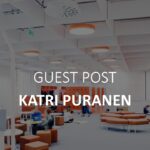
To create a school environment that works well from an auditory perspective, the acoustics must meet the needs associated with the purpose of the premises. Good acoustics are an investment in teachers’ occupational wellbeing, learning and comfort. “I have teaching spaces that work well for me.“ This is what Heikki Ylhäinen, fifth-grade teacher for a […]
Expert Interview: Prof. Astolfi and the Italian school acoustic standard (UNI 11532-2)
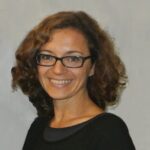
Professor Arianna Astolfi’s tireless work within the field of architectural acoustics culminated in the publication of the Italian acoustic standard for schools, UNI 11532-2. This standard broke new ground in 2020 by including an expanded set of acoustic parameters ensuring optimal communication and speech perception in the classroom. Following the standard is now a legal […]
Italian acoustic standard for schools breaks new ground

The Italian government has distinguished itself by allowing its building policies for school environments to be guided by overwhelming scientific evidence linking classroom acoustics to academic performance. Now the world has a strong example to follow in the shape of the newly published Italian acoustic standard for schools, UNI 11532-2. In 2020, Italy initiated a […]
I LISTEN project harnesses acoustics for special education needs (SEN)
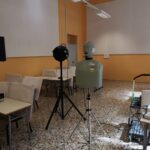
IO ASCOLTO (I LISTEN) is an innovative research project tested in Turin to improve children’s learning abilities at school and intended to combat specific learning disorders experienced by children with special education needs (SEN) such as dyslexia – the inability to read words and texts quickly and correctly – which, according to AID (Italian Dyslexia […]