
One of the most interesting themes in Session A 16.09: Acoustic Comfort in Hospitals at Forum Acusticum 2026 was the complexity of healthcare acoustics. While reducing noise often seems like an obvious goal, two presentations reminded us that acoustic design rarely solves one problem in isolation. Instead, it involves balancing staff and patient needs, safety, […]
Healthcare
Soundscapes, Annoyance and Acoustic Comfort in Hospitals. Forum Acusticum 2026
One of the most thought-provoking sessions I attended at Forum Acusticum 2026 in Graz was Session A16.09: Acoustic Comfort in Hospitals. Two presentations approached a similar question from different angles: what actually makes sound annoying in healthcare environments? While researchers have studied hospital noise for decades, both speakers challenged the idea that measuring sound levels […]
Why is the ICU so noisy? A global survey of hospital soundscapes
Guest post by Dr Pyoung Jik Lee. Close your eyes in an intensive care unit (ICU), and you will hear a strange kind of orchestra: the steady hum of a ventilator, the rhythmic beep of a monitor, footsteps on vinyl flooring, a phone ringing at a nurses’ station, and, somewhere in the background, two clinicians […]
Beyond Decibels: Better Hospital Sound Environments, ICSV32

At the recent International Congress on Sound and Vibration (ICSV32) in Istanbul, two presentations stood out for their focus on a common challenge in healthcare: how we can create hospital sound environments that better support communication, concentration, well-being, and performance. While the speakers approached the issue from different angles, both highlighted an important shift in […]
Listening to the Hospital Soundscape: Two Research Perspectives, ICSV32

At the International Congress on Sound and Vibration (ICSV32) in Istanbul, several presentations highlighted a topic that is becoming increasingly difficult to ignore: the sound environment in healthcare facilities. While healthcare has made enormous advances in patient safety, technology and clinical outcomes, the acoustic environment often remains overlooked. Two presentations in particular caught my attention […]
Acoustics impact the quality of life when living with Memory disorder
This text was previously published on The Alzheimer Society of Finland’s blog to educate various stakeholders about the importance of a supportive environment for people with memory disorders. Memory disorder We know that hearing loss and memory problems are linked: as hearing gets harder, social interactions become more difficult, often causing people to withdraw from […]
Acoustical Consultant
Photo by Ela Fasllija
Space for Music: Elements to incorporate into Healthcare Designs
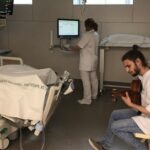
by Agostina Ferrentino, Clara Rius, and Ramón Torrents Introduction: Space for music The hospital is one of the most acoustically demanding environments that exist. Medical equipment, alarms, conversations and continuous activity generate noise levels that affect both rest and the emotional state of patients and staff. For decades, healthcare design has focused on minimising this impact […]
The many impacts of inadequate acoustic environments on neurodivergent and noise sensitive people.
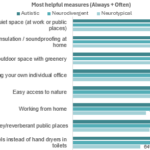
Guest post by Carmen Rosas-Pérez (a PhD student at Heriot-Watt University, Edinburgh (UK)). Overview This post summarises the research done for my PhD Thesis ‘Disabling Acoustics: Impact of daily-life acoustic environments on neurodivergent, auraldivergent and noise sensitive people’ carried at Heriot-Watt University (UK) and funded by a James Watt scholarship. As a neurodivergent acoustic engineer […]
Patient-Centric Design: The Room Entrance as a Strategic Acoustic Filter

By Veronica Amodeo Patient-Centric Design Hospital environments have a significant influence on patient recovery, not only through clinical care but also through environmental factors that impact biological, psychological, and social well-being. Among these factors, noise remains one of the most critical and yet insufficiently controlled stressors. Excessive sound exposure in healthcare settings has been linked […]