
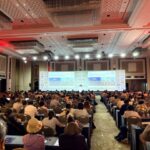
At the recent International Congress on Sound and Vibration (ICSV32) in Istanbul, two presentations stood out for their focus on a common challenge in healthcare: how we can create hospital sound environments that better support communication, concentration, well-being, and performance. While the speakers approached the issue from different angles, both highlighted an important shift in […]
room acoustics
Listening to the Hospital Soundscape: Two Research Perspectives, ICSV32
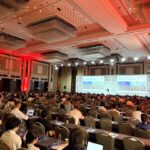
At the International Congress on Sound and Vibration (ICSV32) in Istanbul, several presentations highlighted a topic that is becoming increasingly difficult to ignore: the sound environment in healthcare facilities. While healthcare has made enormous advances in patient safety, technology and clinical outcomes, the acoustic environment often remains overlooked. Two presentations in particular caught my attention […]
Acoustical Capacity for Group Work in University Classrooms
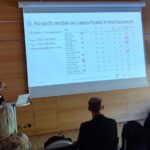
At BNAM 2026 – “Room Acoustics – Offices, Hospitals, Schools, Restaurants” Oliver Bonde’s presentation “Acoustical Capacity for Group Work in University Classrooms” was first up in the session named “Room Acoustics – Offices, Hospitals, School, Restaurants”, chaired by Peter Svensson and Ayca Sentop Dumen. Background and based on Rindel’s eating establishments As Oliver explained, the […]
Acoustics impact the quality of life when living with Memory disorder
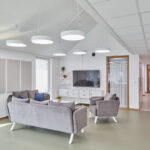
This text was previously published on The Alzheimer Society of Finland’s blog to educate various stakeholders about the importance of a supportive environment for people with memory disorders. Memory disorder We know that hearing loss and memory problems are linked: as hearing gets harder, social interactions become more difficult, often causing people to withdraw from […]
New research study to investigate noise exposure and stress in Finnish sports halls
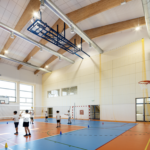
The Liikkamelu project, begins now in spring 2026 and will produce for the first time research-based data on the noise exposure and stress of those working in sports halls. Study Aims This project will examine the noise exposure, stress and well-being of those working in sports halls, as well as the room acoustics of the […]
Round Robin Test is more than a technical exercise—it’s a call to action!
Guest post by Professor Marco Caniato University of Applied Science HFT of Stuttgart After some preparation time, the project began and has been extended due to input from many countries worldwide! Participants are involved from all over the world, so you are part of a large international scientific research round robin test initiative, bringing together […]
Quiet Enough to Think, Open Enough to Thrive
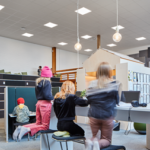
A qualitative study of sound environments in traditional and open classroom settings This Swedish qualitative study explores how students, teachers, and school staff at Gantofta School experience the sound environment in two contrasting learning settings: a traditional classroom (Learning space typology – Type A/B, Fig.1) and an open, flexible learning environment known as Amfi (Lst […]
Acoustical Consultant
Photo by Ela Fasllija
The many impacts of inadequate acoustic environments on neurodivergent and noise sensitive people.
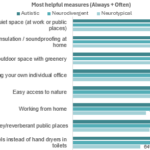
Guest post by Carmen Rosas-Pérez (a PhD student at Heriot-Watt University, Edinburgh (UK)). Overview This post summarises the research done for my PhD Thesis ‘Disabling Acoustics: Impact of daily-life acoustic environments on neurodivergent, auraldivergent and noise sensitive people’ carried at Heriot-Watt University (UK) and funded by a James Watt scholarship. As a neurodivergent acoustic engineer […]
The importance of C50 for speech communication and classroom group activities
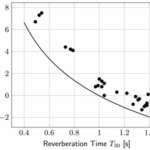
This study investigates the acoustic conditions of 26 primary school classrooms during lessons. There was a specific focus on how classroom activity type, student age, and room acoustics shape both speech levels and activity noise. Using Gaussian Mixture Models, the researchers separated teacher and student speech from non-speech activity noise across 93 homogeneous activity periods. […]